African Sculpture and Masks: A Different Way of Representing the Human Form
While Cézanne was transforming European painting, another important source of artistic discovery was emerging in Paris. During the late nineteenth and early twentieth centuries, African sculpture and masks were increasingly encountered in European museums, private collections, galleries, and exhibitions. For many European artists, these objects presented an unfamiliar approach to representing the human figure. Instead of attempting to reproduce anatomical proportions and naturalistic facial features, many African artistic traditions used deliberate stylization, simplified forms, expressive exaggeration, and highly developed systems of symbolic meaning.
A face might be constructed from strong geometric elements. The eyes, nose, and mouth could be emphasized or transformed according to the object’s cultural, ceremonial, or spiritual purpose. These were not attempts at imperfect realism. They were sophisticated artistic traditions with their own histories, meanings, materials, and aesthetic principles. For European modern artists searching for alternatives to academic naturalism, encountering these works could be profoundly influential.
Paris and the discovery of African art
Paris was an important center for these encounters. African objects had entered European collections through colonial conquest, trade, missionary activity, and ethnographic collecting. Many were removed from their communities and displayed in museums primarily as ethnographic specimens rather than being recognized as works of art. One of the most important places in this story was the Musée d’Ethnographie du Trocadéro, now associated with the history of the Musée de l’Homme. The museum housed collections of objects from different parts of the world. Its displays often reflected the colonial attitudes of the period, but they also brought artists into contact with objects and visual traditions they might otherwise never have encountered.
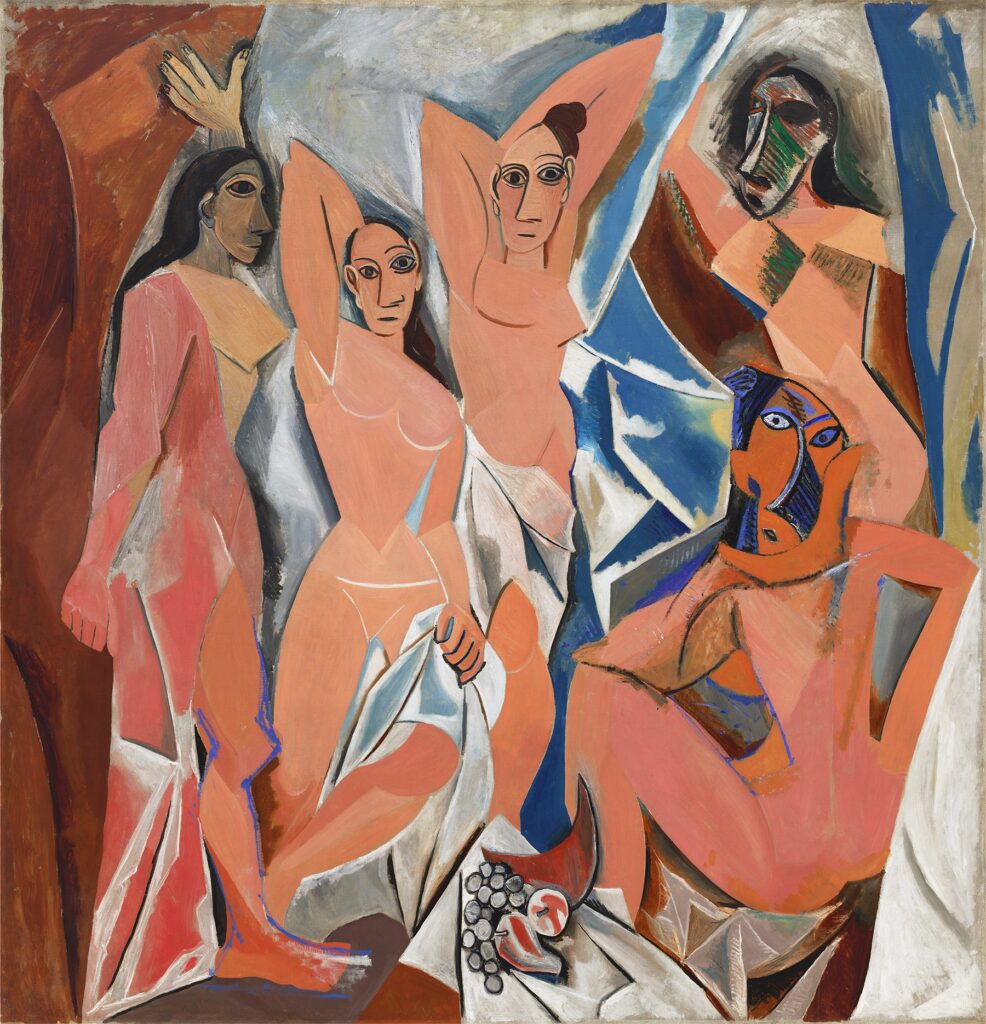
Picasso’s visit to the Trocadéro in 1907 became an important moment in the history of modern art. He encountered African masks and sculptures that challenged familiar European ideas about the human face and body. The experience has frequently been associated with the development of Les Demoiselles d’Avignon, although the relationship between particular objects and the painting is more complicated than a simple one-to-one influence. It is also important to recognize that African sculpture was never one unified style. The continent contains many different peoples, artistic traditions, and sculptural languages. The masks and figures discussed in relation to Picasso came from specific cultural contexts, not from a single general category of African art.
What attracted European artists to these sculptures?
One of the most striking qualities was the way many sculptors approached the human face. In traditional European portraiture, artists often aimed to preserve individual likeness, anatomical accuracy, and convincing expressions. In many African sculptural traditions, facial features could instead be organized according to formal, symbolic, or spiritual purposes. The nose might be elongated. The eyes might become narrow or enlarged. The forehead could be exaggerated, and the face might be organized around strong planes and carefully balanced proportions. These features offered European artists an alternative to the conventions they had inherited. For Picasso in particular, the encounter helped reinforce an emerging interest in simplified and expressive facial structures.
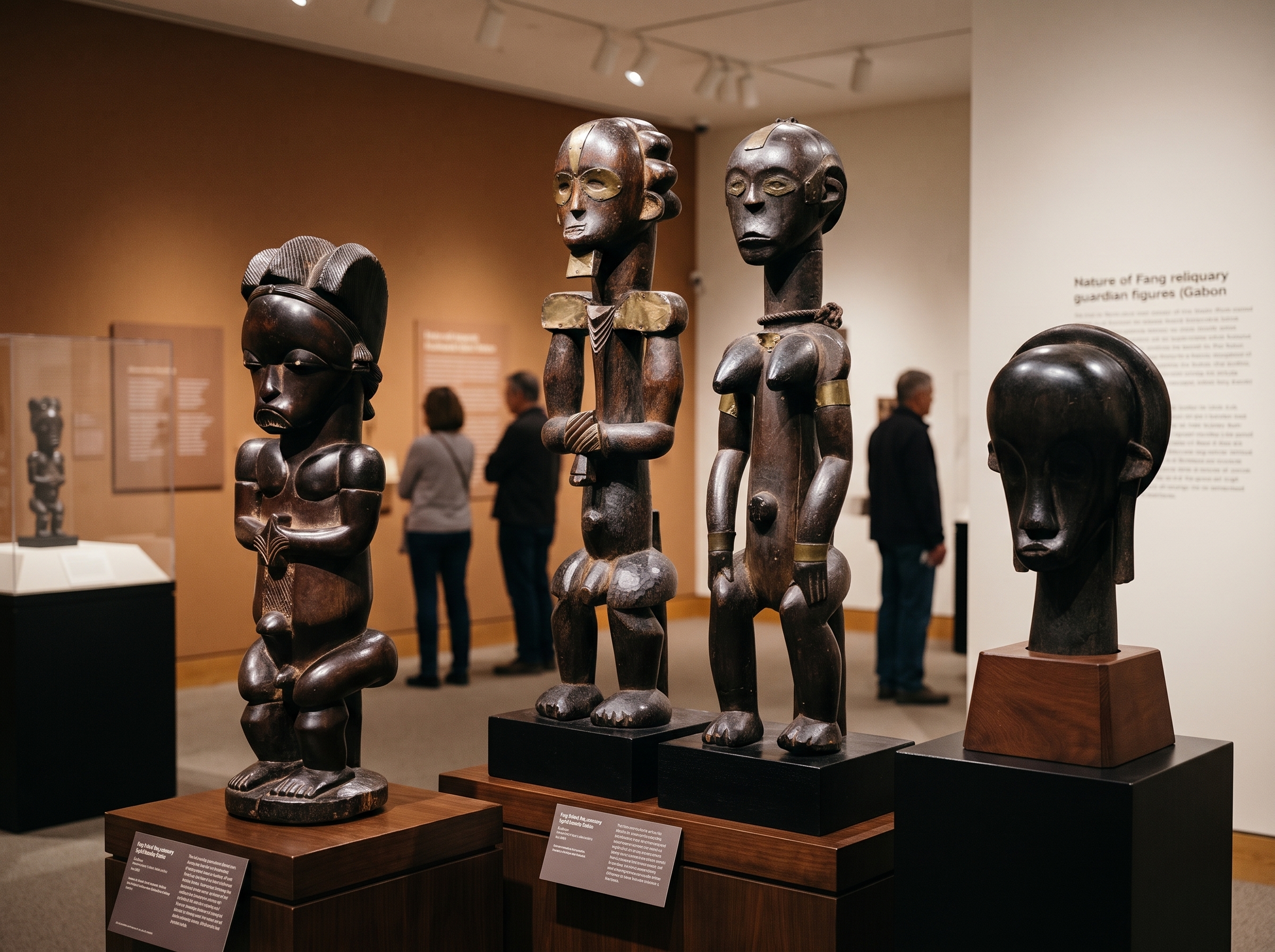
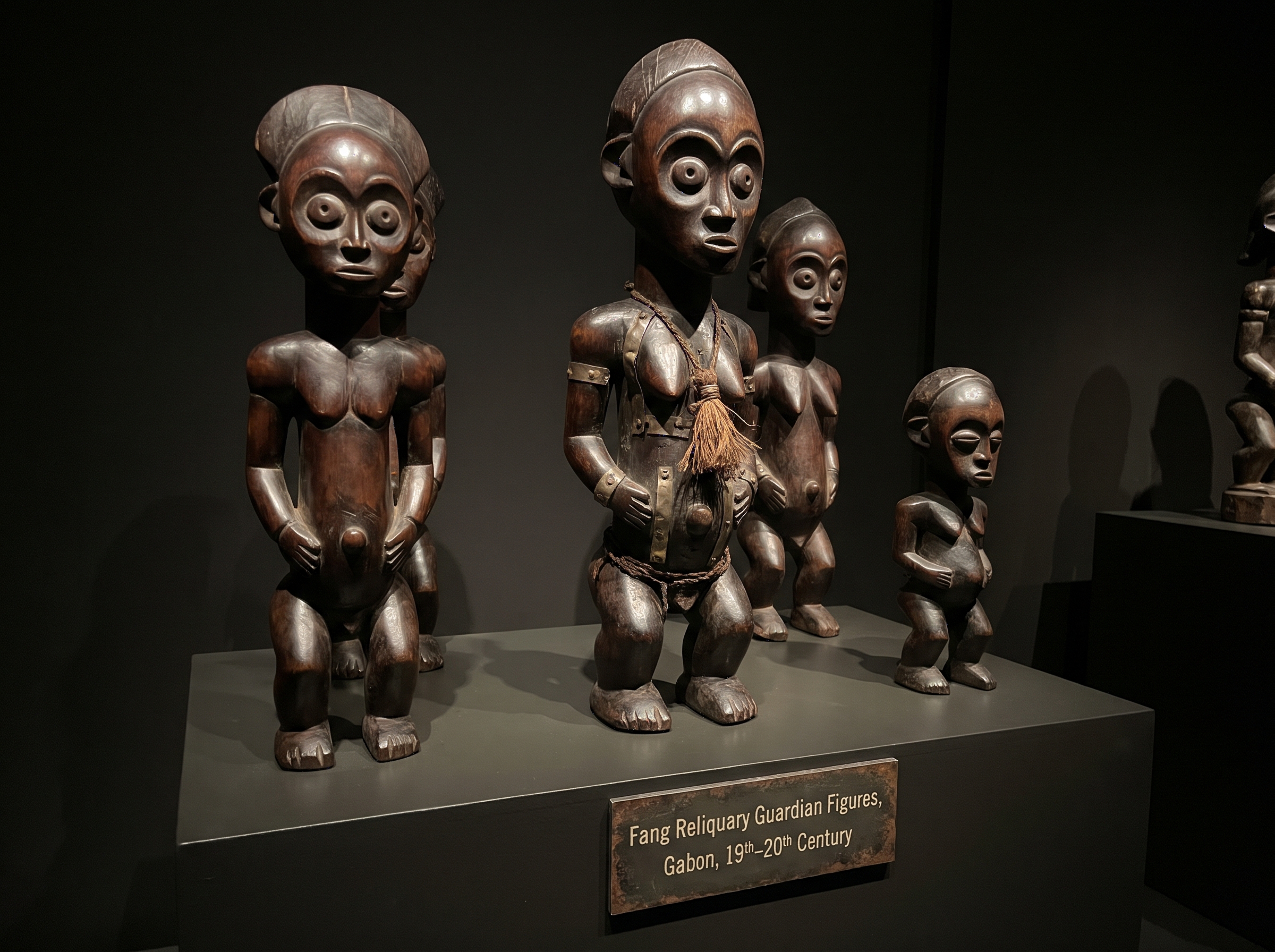
1. Fang reliquary guardian figures – Gabon
The Fang peoples of Central Africa created remarkable reliquary figures, often associated with the protection of ancestral remains. These sculptures frequently feature elongated forms, powerful facial structures, and simplified anatomical proportions. Their sculptural presence and formal construction make them useful examples when discussing the different ways artists can represent the human figure.
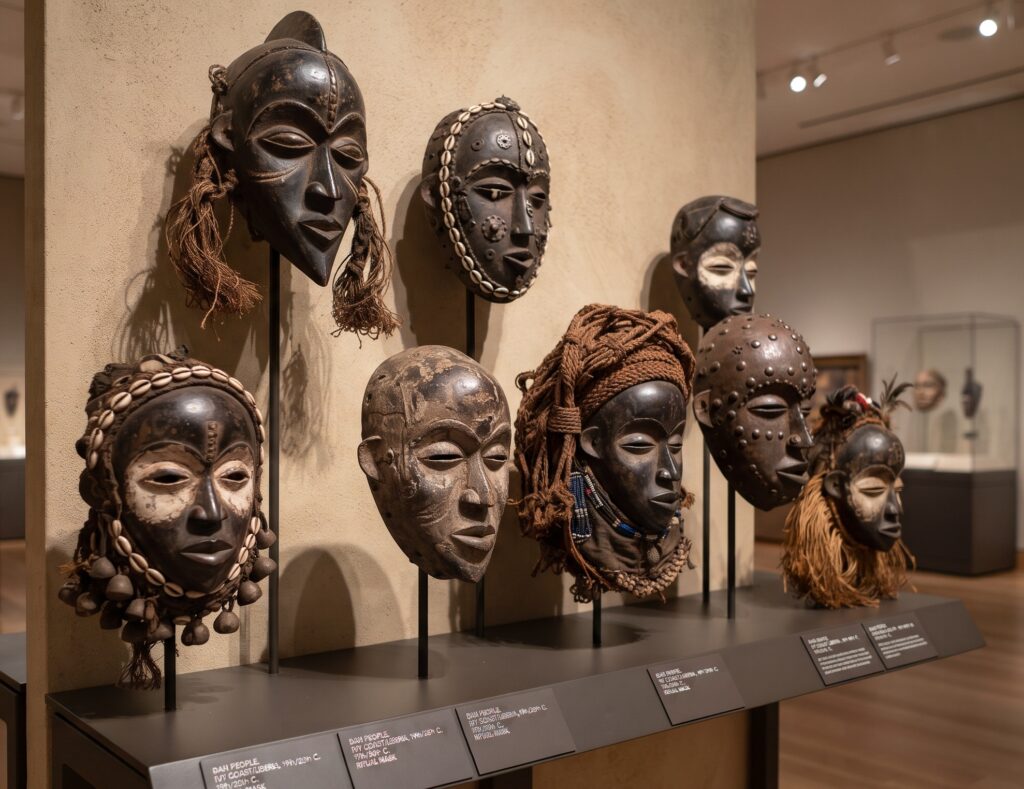
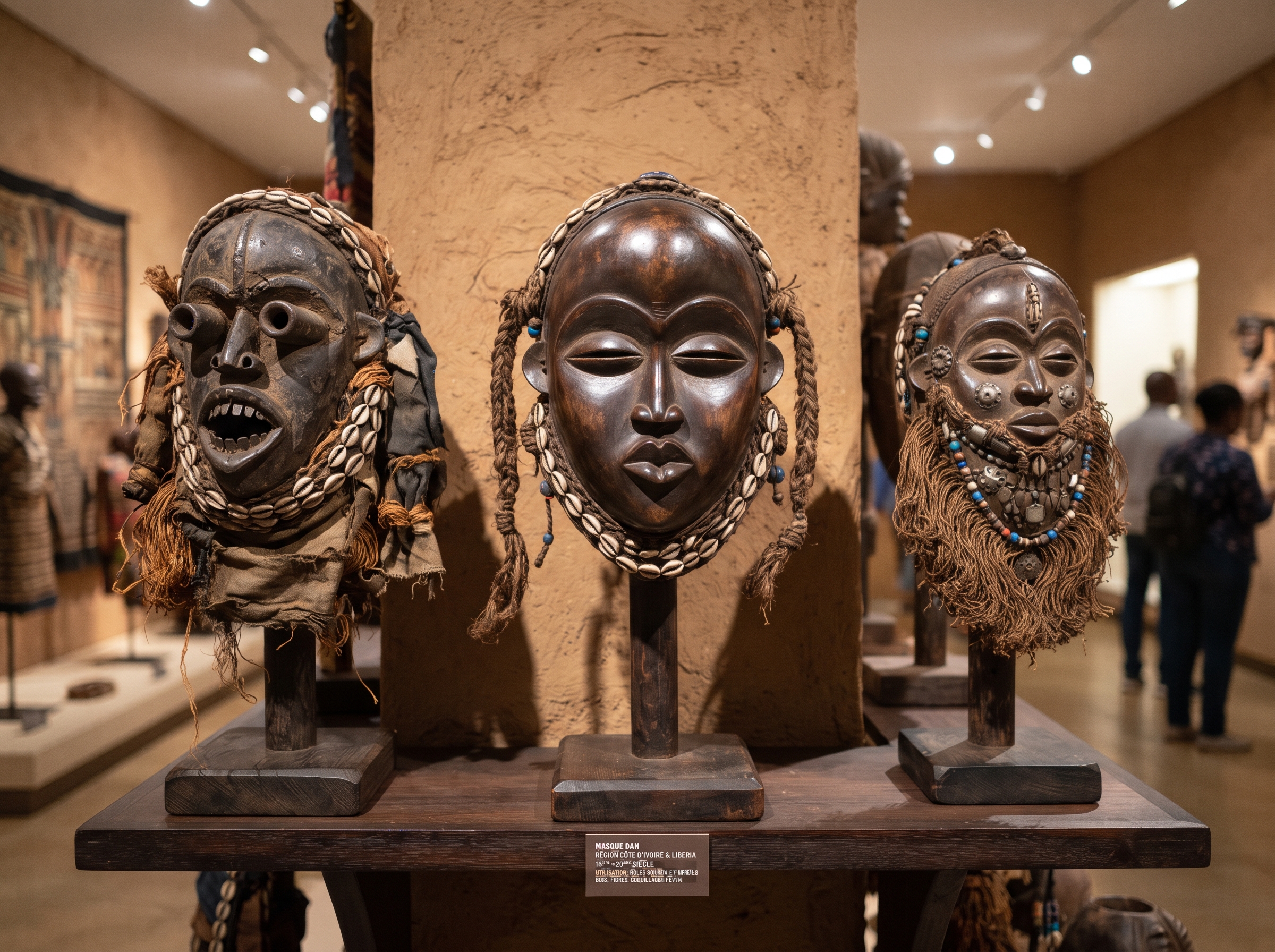
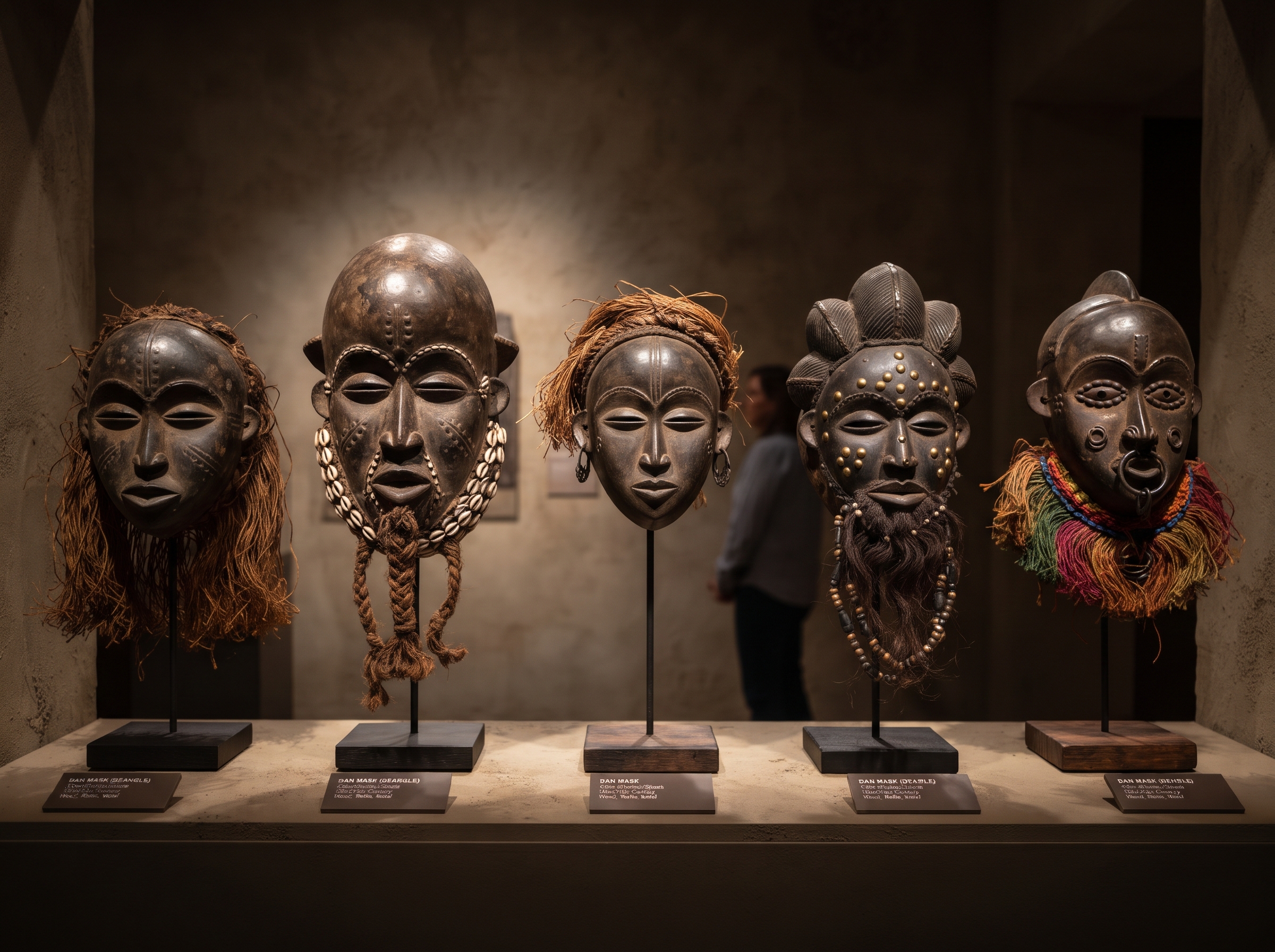
2. Dan masks – Côte d’Ivoire and Liberia
Dan communities developed a rich tradition of masks associated with social, spiritual, and ceremonial life. Some examples feature carefully balanced facial proportions, prominent foreheads, and distinctive eye and mouth shapes. These masks demonstrate how artistic form can communicate identity, social roles, and spiritual significance beyond naturalistic representation.
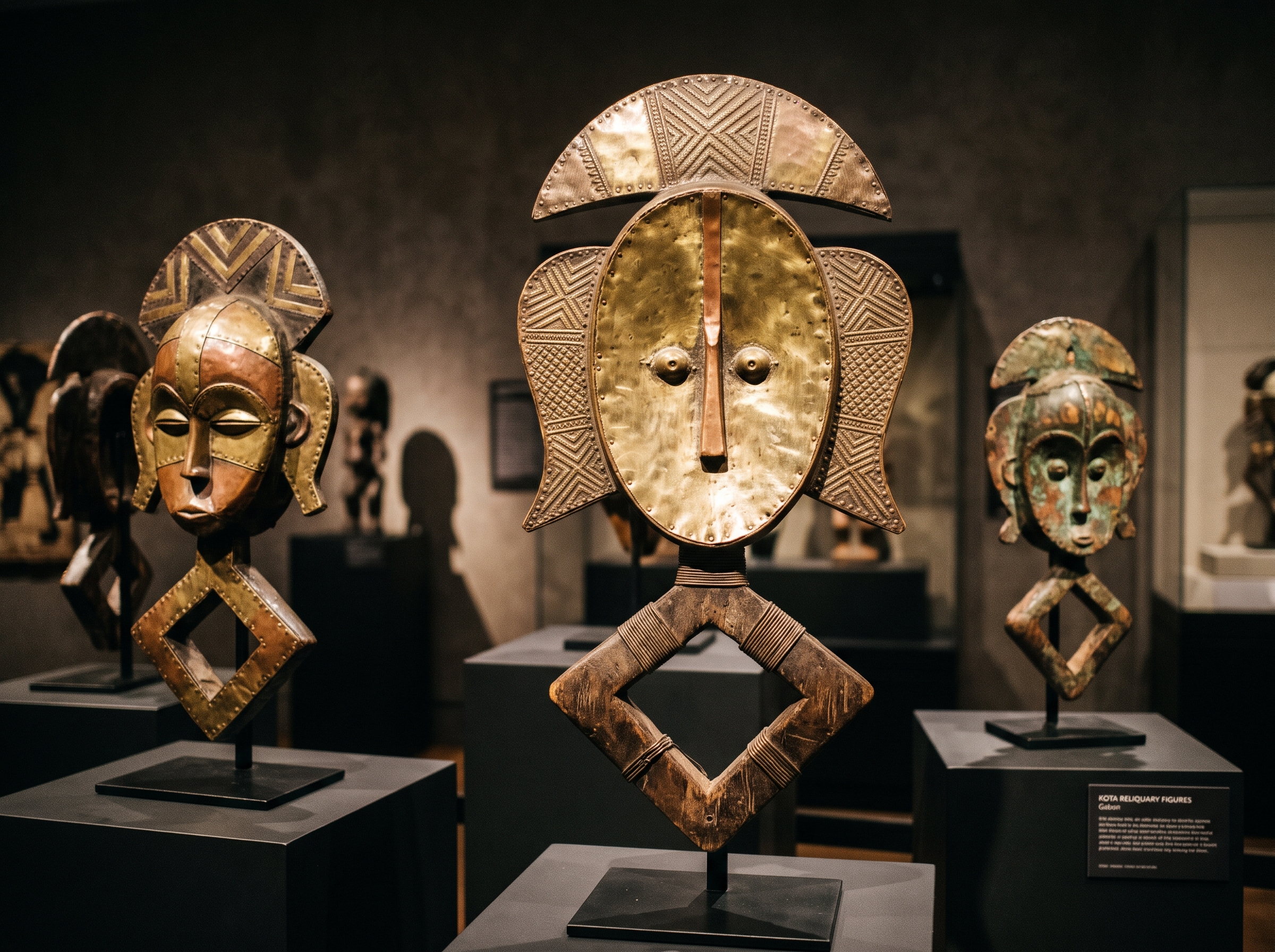
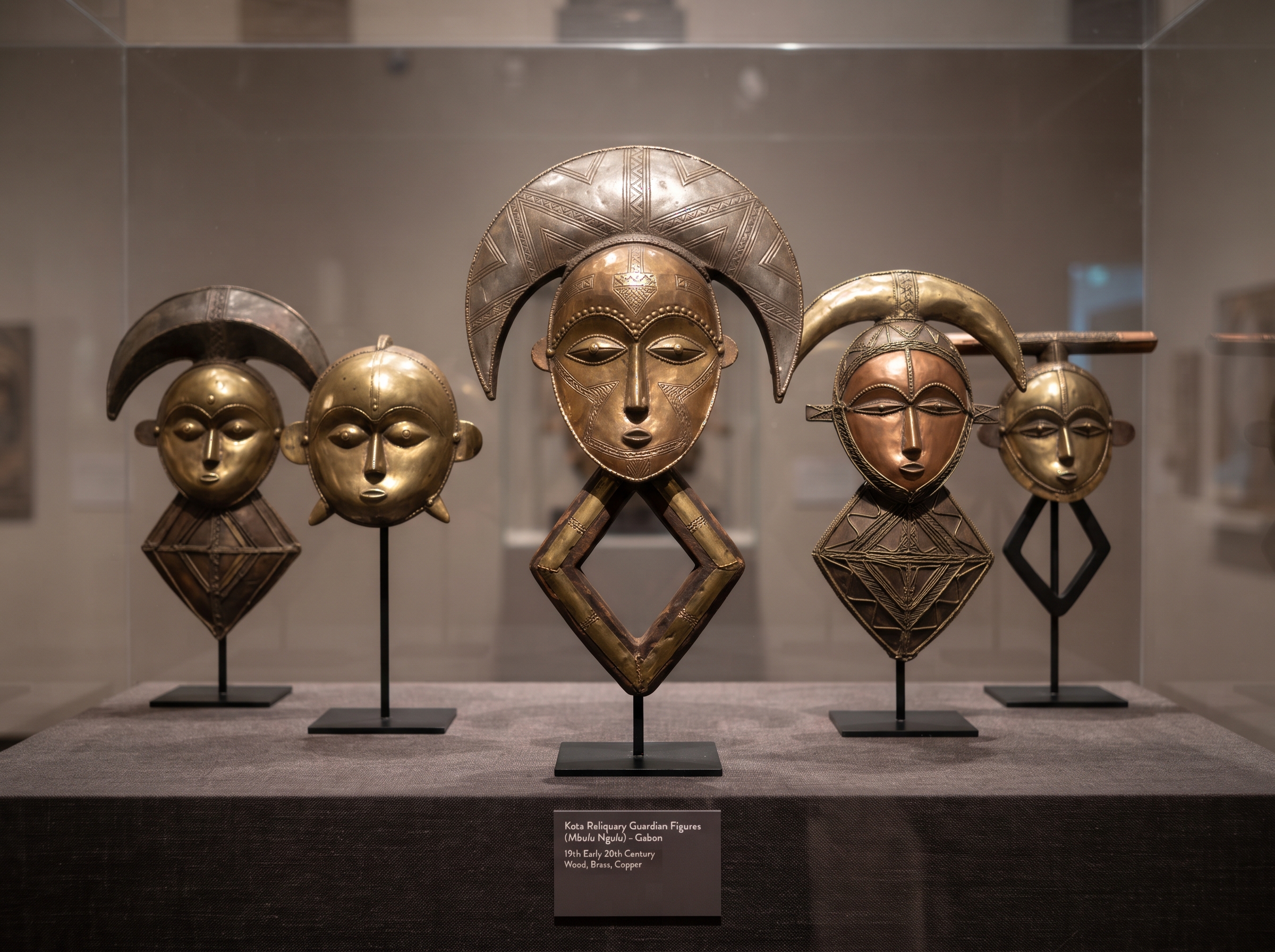
3. Kota reliquary figures – Gabon
Kota reliquary figures are particularly striking for their abstract treatment of the human head and body. Many feature a highly simplified face, often with a broad metallic surface, projecting facial elements, and an abstracted body structure. Their visual language may seem surprisingly modern to contemporary viewers, but these works belong to established cultural and spiritual traditions with histories independent of European modernism.
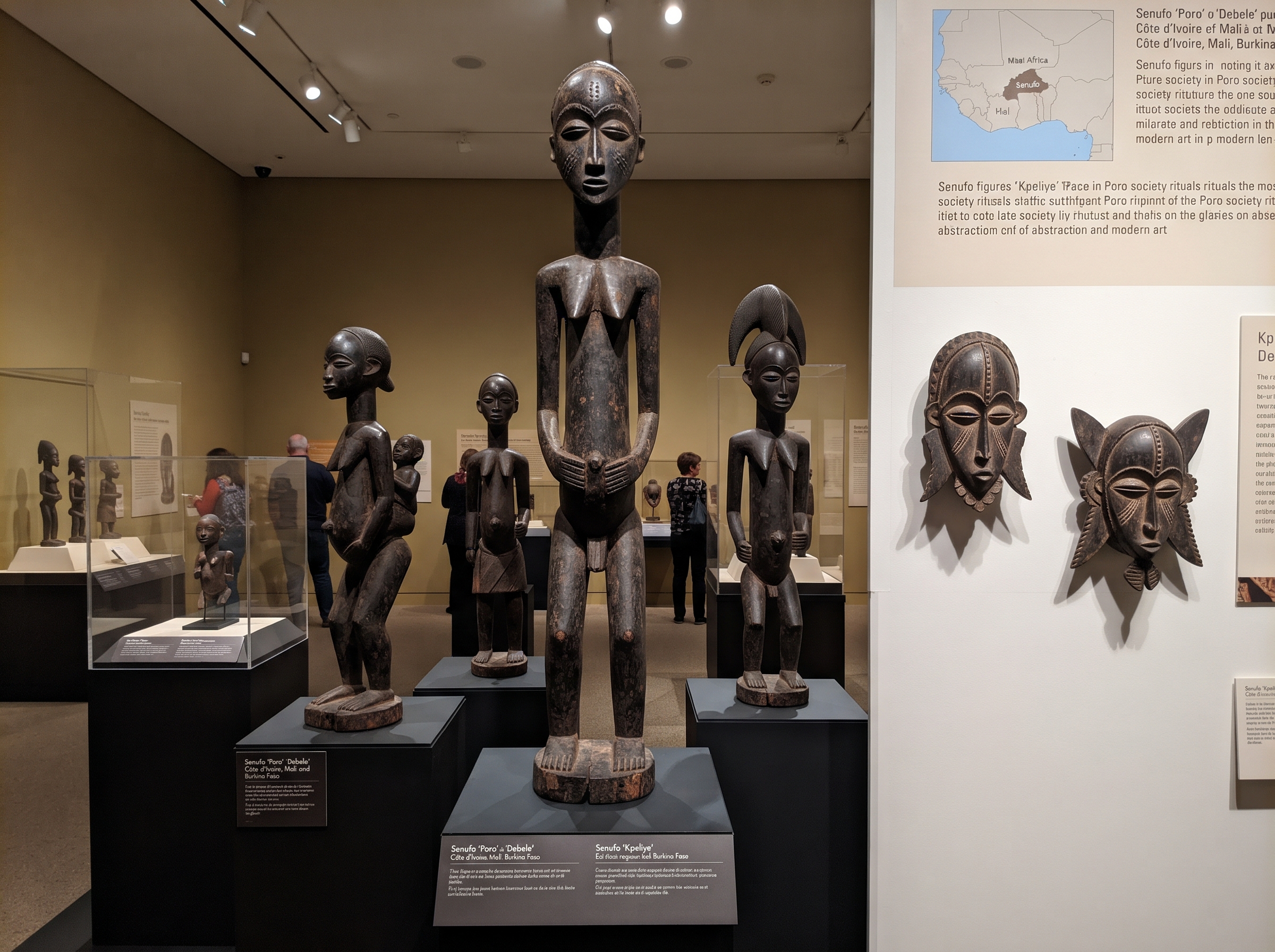
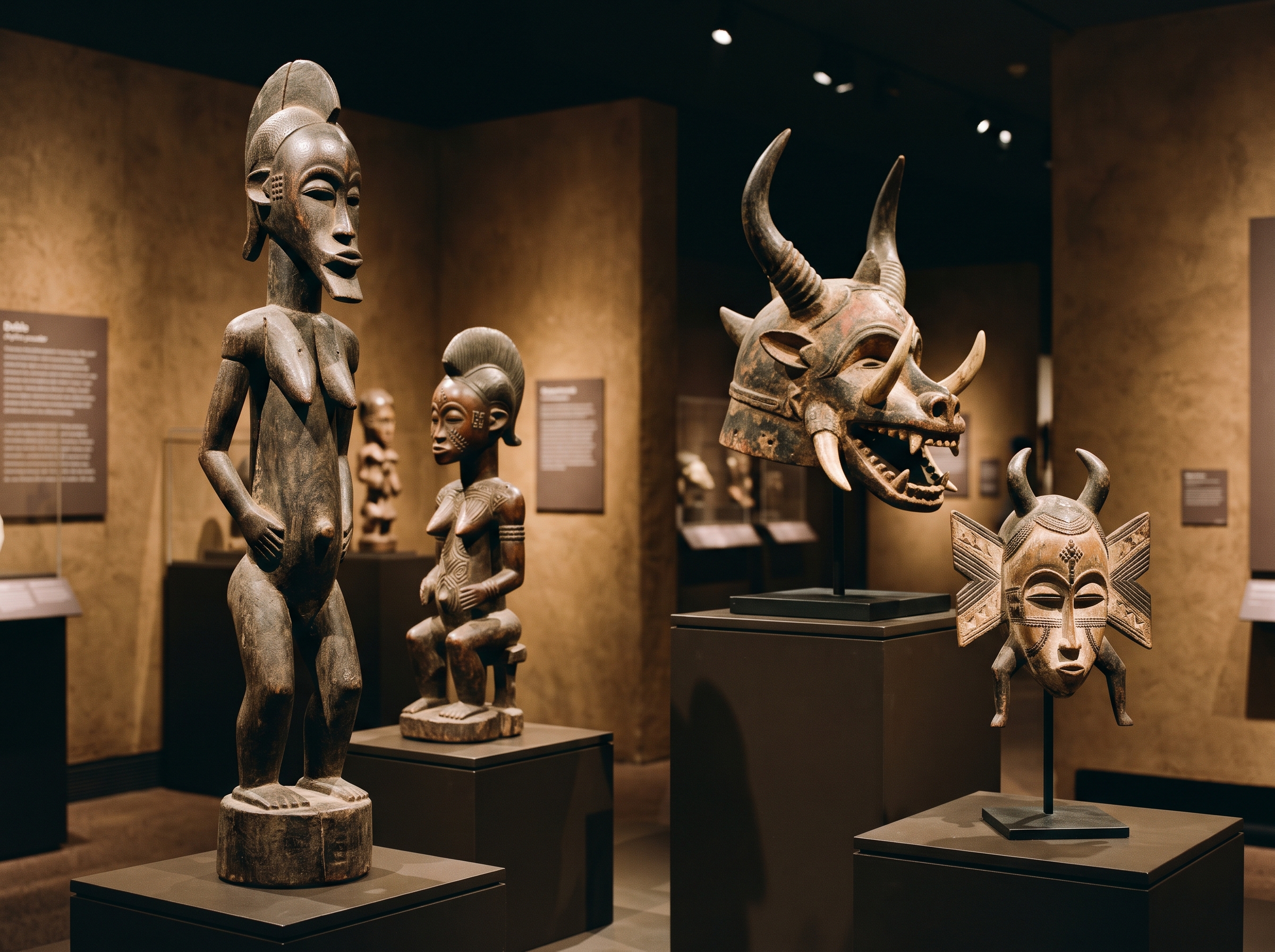
4. Senufo sculpture – Côte d’Ivoire, Mali, and Burkina Faso
Senufo artistic traditions include a wide variety of sculptural and mask forms. Some figures emphasize elongated proportions, simplified anatomy, and powerful silhouettes. They are useful examples of how abstraction and stylization were already highly developed in African art long before European Cubism appeared.
The influence on Picasso
The importance of African sculpture in Picasso’s development becomes particularly visible when examining the changing appearance of his figures around 1907. His faces become increasingly mask-like, with sharper features, simplified anatomical structures, and a more forceful relationship between facial elements. However, it would be misleading to suggest that Picasso simply copied African masks or that Cubism originated from them alone. His work was also being shaped by Iberian sculpture, Cézanne’s treatment of form, and his own continuing experiments with composition and perspective.
African art was an important part of a much larger artistic transformation. It also deserves recognition in its own right. The objects that inspired European modernists were not created to serve as stepping stones toward Cubism. They were expressions of cultures with their own sophisticated artistic systems, histories, and purposes. That distinction is important when telling the story honestly.
Iberian Sculpture: An Ancient Influence on Picasso’s Modern Vision
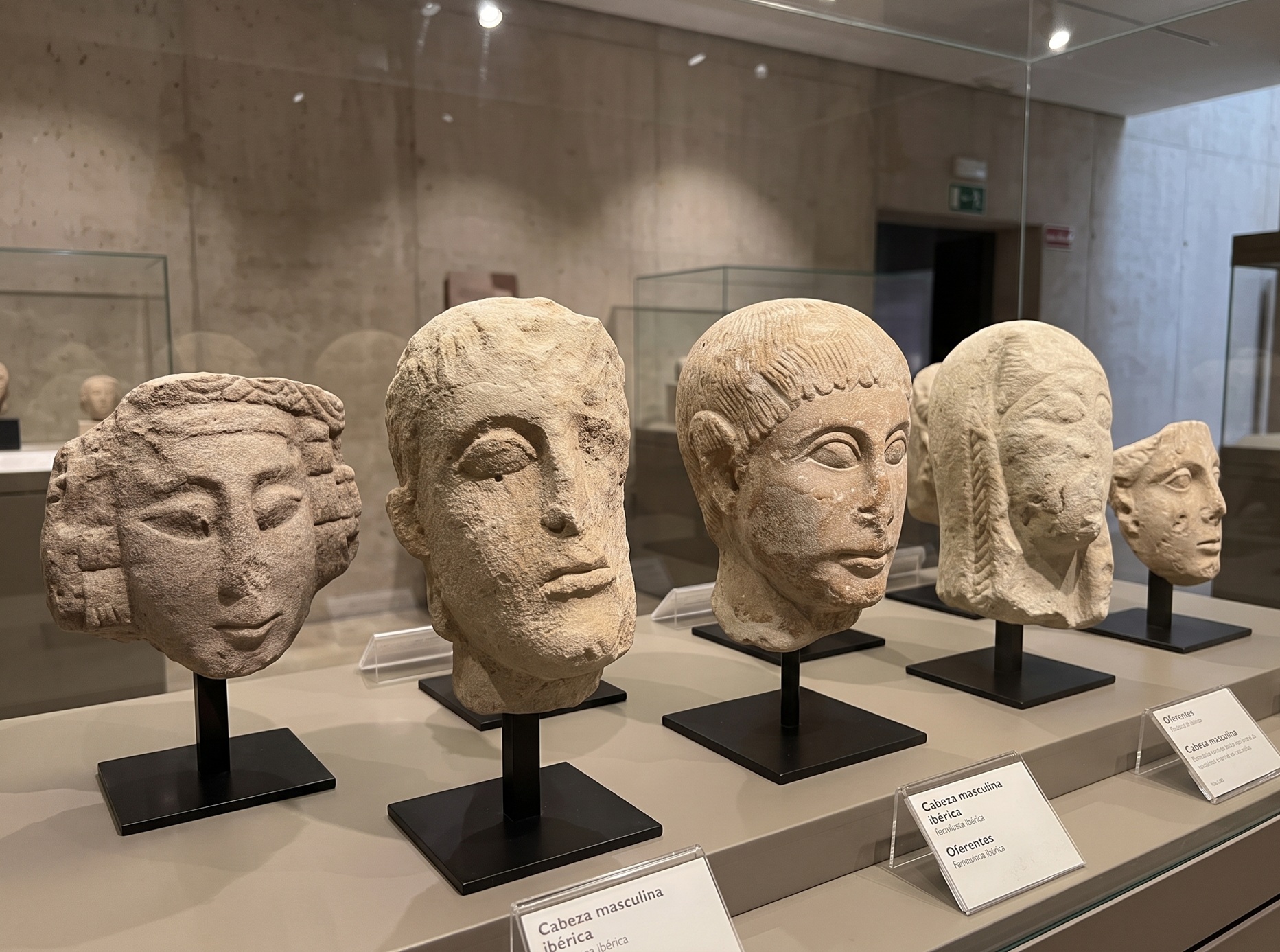
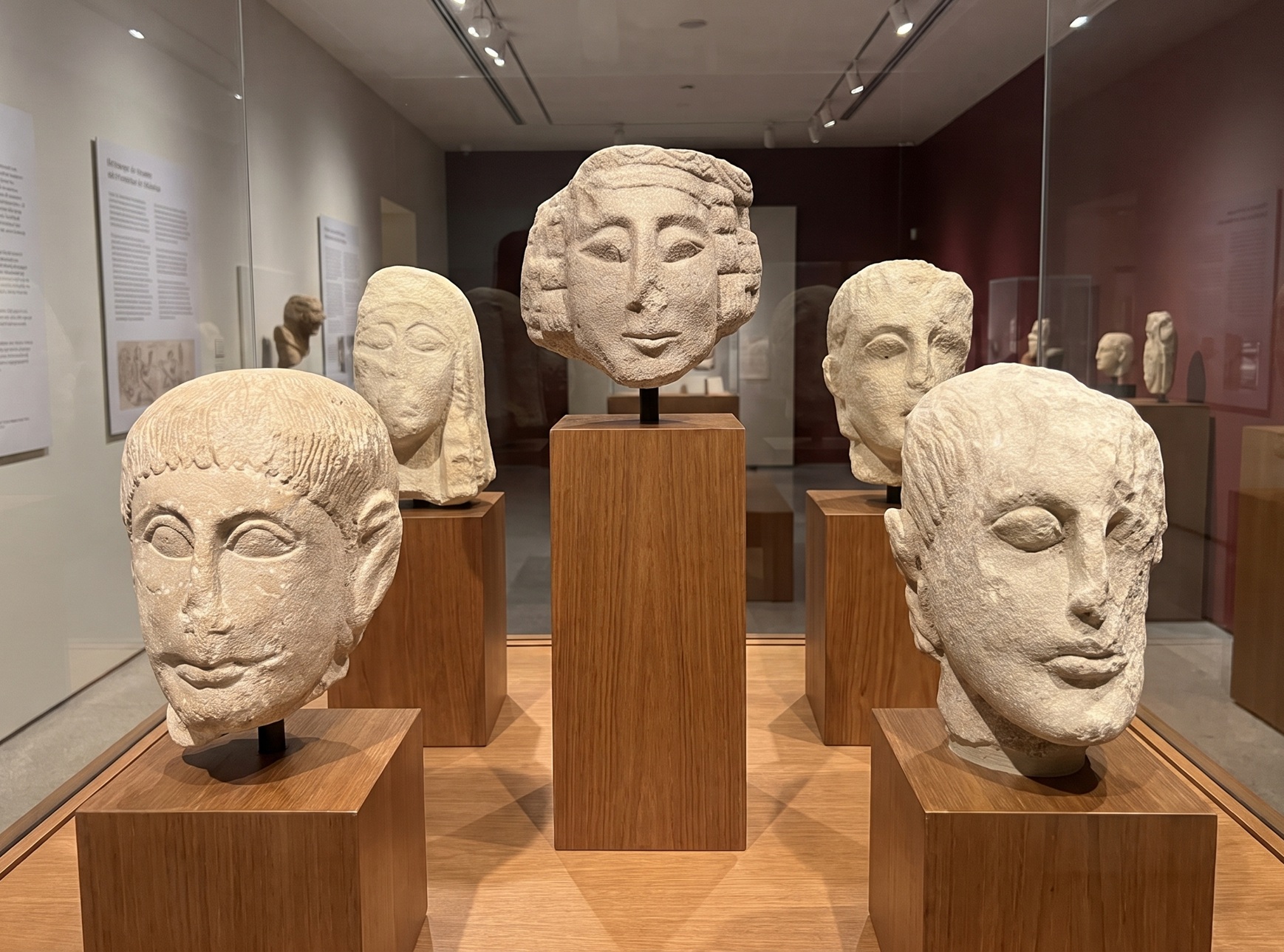
Another important influence on Picasso came from a much older artistic tradition: the sculpture of ancient Iberia. Iberia refers broadly to the ancient region corresponding largely to present-day Spain and Portugal. Before the Roman conquest, the region was home to a variety of cultures that developed distinctive traditions of sculpture, metalwork, architecture, and funerary art. Some of these sculptures featured highly stylized human figures, simplified faces, and carefully organized geometric features. For Picasso, who was born in Málaga, Spain, this ancient artistic heritage was particularly significant.
The discovery of Iberian sculpture
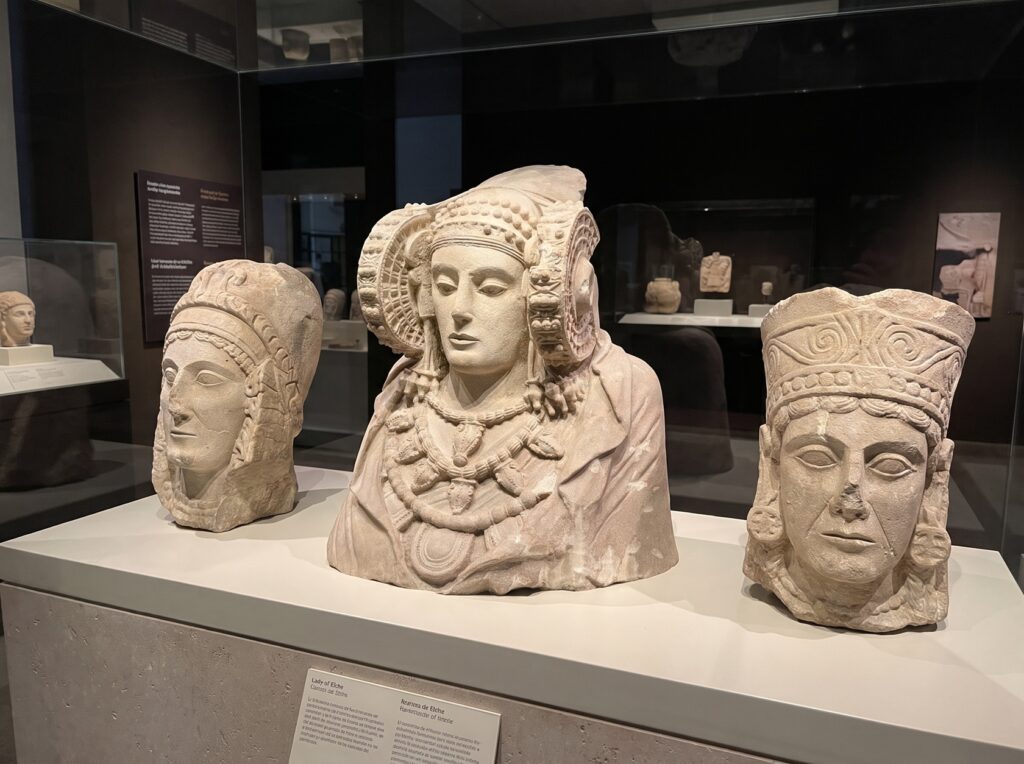
During the late nineteenth and early twentieth centuries, archaeological discoveries brought greater attention to the ancient cultures of the Iberian Peninsula. One of the most famous discoveries was the Lady of Elche, a remarkable limestone bust discovered in Spain in 1897. The sculpture dates to approximately the fourth century BCE and depicts a woman wearing an elaborate headdress and distinctive circular ornaments beside her face. Its formal construction is striking. The face is calm and highly stylized, with a strong frontal arrangement and carefully simplified features. The elaborate headdress and jewelry give the sculpture an almost architectural quality. Although it is not accurate to treat the Lady of Elche as a direct blueprint for Picasso’s Cubism, it is an excellent example of the ancient Iberian sculptural traditions that helped broaden his understanding of form.
The Lady of Elche – 4th century BCE
This is an especially useful image for the article because readers can immediately see how different ancient Iberian sculpture was from conventional nineteenth-century European portraiture. The sculpture is not attempting to reproduce a person in the manner of a realistic photographic portrait. Instead, it combines stylized facial features with an elaborate arrangement of ornamental forms. It offers a fascinating comparison with Picasso’s later experiments with faces.
Picasso and the ancient Iberian heads
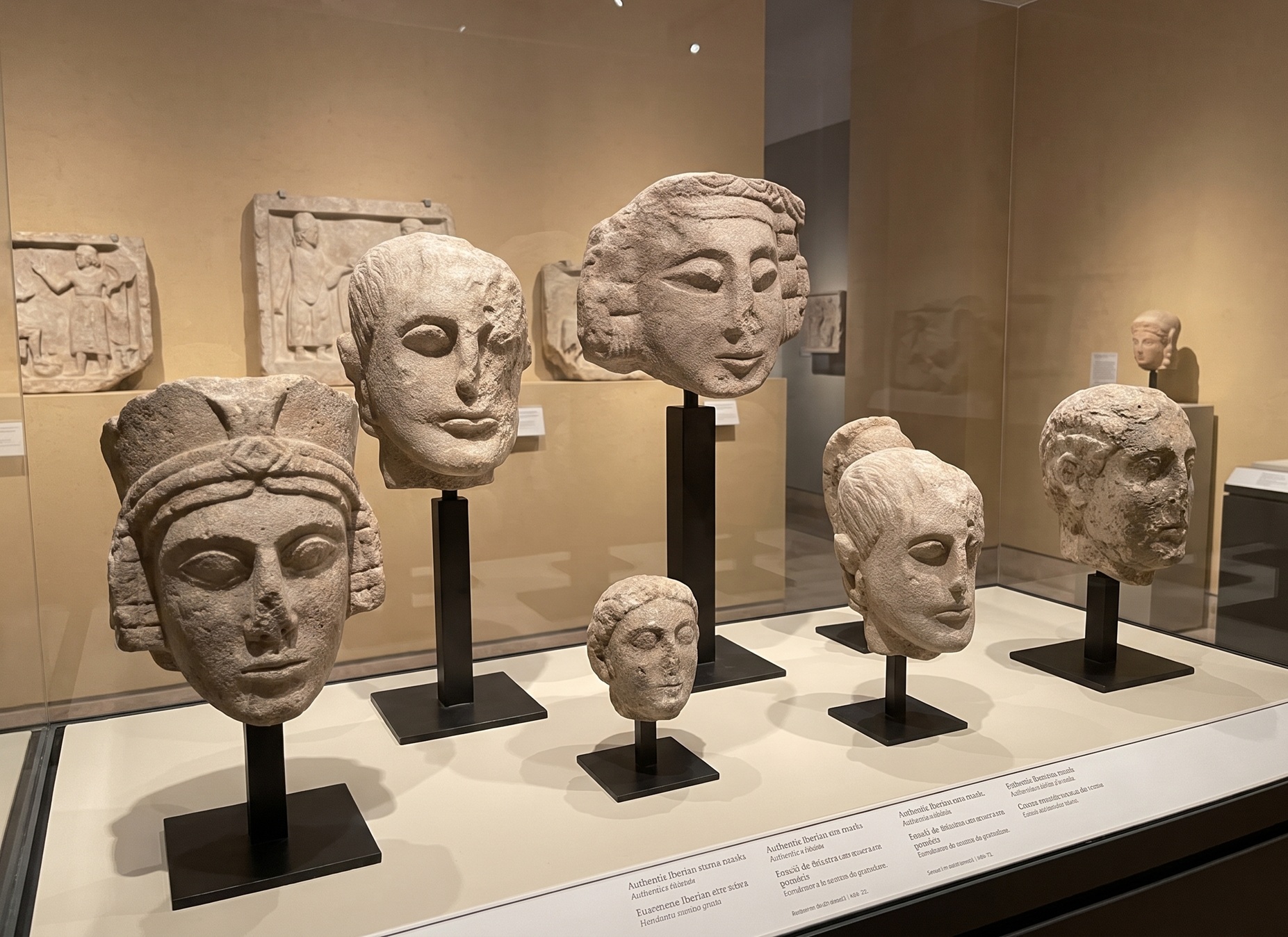
Picasso’s interest in Iberian sculpture became especially important around 1906. He encountered ancient Iberian heads and other sculptural objects, including works that had entered the Louvre’s collection. The influence can be seen in his portraits and studies from this period, where faces begin to lose some of their traditional naturalistic modeling.
Features become simplified. The nose and eyebrows may be emphasized through strong shapes, while the eyes and mouth are organized into a more sculptural arrangement. The result is not simply a less realistic portrait. It is a different way of constructing the human face. Picasso was beginning to see the face as a composition of forms.
Important painting: Two Nudes 1906
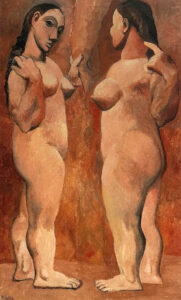
One of the most useful paintings for understanding Picasso’s transition is Two Nudes 1906. The painting belongs to the period immediately preceding Les Demoiselles d’Avignon.
The figures are simplified and monumental, with solid bodies and increasingly stylized facial features. Their forms appear more sculptural than those in conventional naturalistic painting.The figures also demonstrate Picasso’s growing interest in the relationship between the human body and the surrounding pictorial space.
Rather than relying entirely on realistic anatomical detail, he emphasizes the overall construction of the figures. It is a transitional work, and an important one. The painting shows that Picasso’s movement toward Cubism was already underway before his encounter with African art at the Trocadéro.
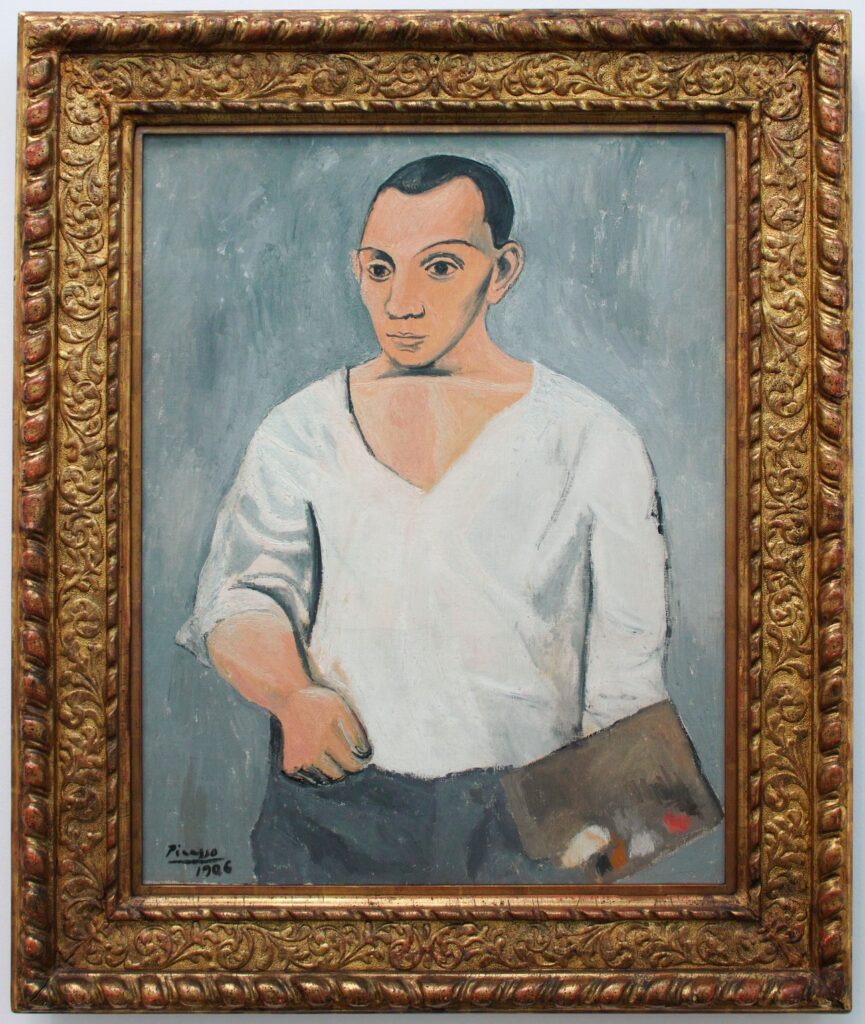
Important painting: Self-Portrait with Palette 1906
Another useful work is Picasso’s Self-Portrait with Palette 1906. The painting reveals a shift toward a more monumental and simplified treatment of the human face. Picasso’s features are presented with a strong sense of structure. The face is no longer simply a collection of realistic details but an organized arrangement of planes, shapes, and tonal relationships. This is particularly interesting when compared with his earlier Blue Period and Rose Period portraits. The emotional qualities of those earlier works have not entirely disappeared, but Picasso is increasingly interested in how a figure can be constructed visually. The painting helps illustrate the transition from expressive representation toward a more structural approach.